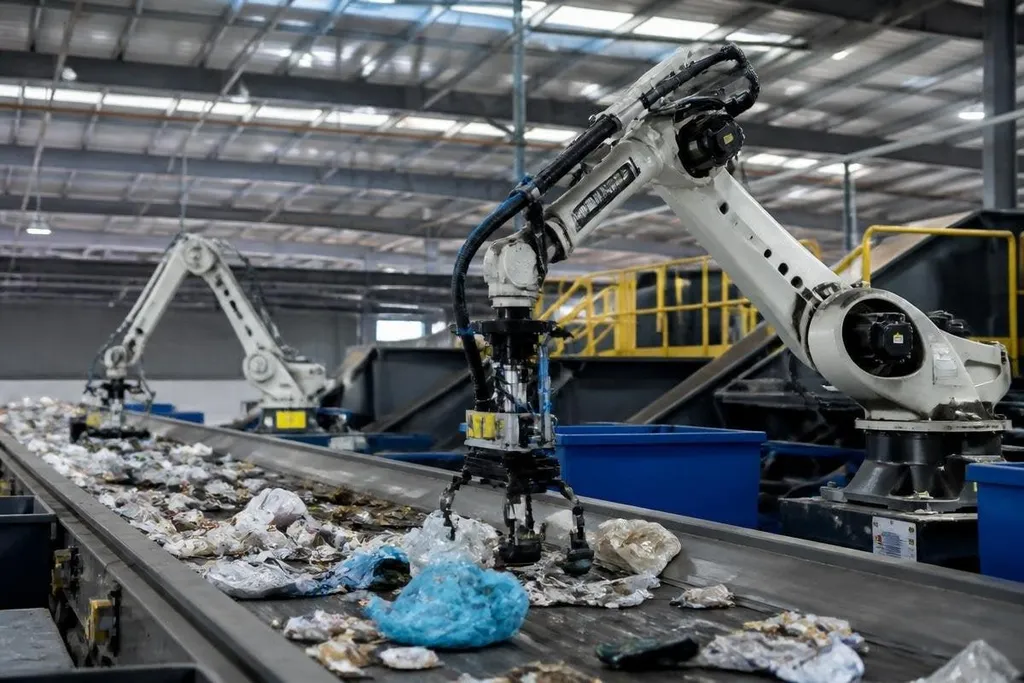
Waste robots have a clear business opening: they can take on work that is dirty, risky, repetitive, or hard to staff. The strongest cases start with one task, one waste stream, and a buyer who can measure the result.
Quick read
- Sorting systems can earn money by raising the value of recovered material.
- Collection robots need a clear route, safe movement, and a buyer for the service.
- Leasing, maintenance, and data may matter as much as the robot itself.
Where the work is
Waste management contains many tasks, but they do not all suit robots. A sorting robot can identify items on a conveyor and move them into separate bins. A mobile system could inspect landfill areas, carry containers, or collect waste along a fixed route.
The business case changes with each task. Sorting happens in a controlled space, where lighting, conveyor speed, and bin locations can be set. Outdoor collection brings uneven ground, people, vehicles, weather, and objects that may block the route.
That difference matters to a buyer comparing a robot with people or existing equipment. A narrow task gives the maker fewer conditions to handle, so the robot has a better chance of working through a full shift without a human taking over.
Hazardous waste creates another opening. Robots may handle objects that expose workers to sharp edges, chemical residue, dust, or biological material. Any sale in this area still needs proof of safe operation, cleaning, repair, and failure response.
How the money could work
Selling the robot is one route. A waste company could also pay a monthly fee for a robot, its software, service visits, replacement parts, and remote support. That spreads the cost over time and gives the maker a reason to keep the system running after delivery.
A service contract may suit smaller operators that lack robotics staff. The vendor can install the system, train workers, check performance, and fix faults. The contract needs clear limits: response time, spare-part costs, software changes, and what happens when the robot misses a task.
Recovered material creates a second source of value. If a sorting system sends more clean material to a buyer, the waste operator may earn more from each load. The maker still needs a measured link between robot output and payment; a claim about better sorting has little use without the weight, grade, and sale price of the recovered material.
Data can support another product. A robot may record how much waste it handles, where contamination appears, or how often a route needs human help.
A buyer pricing a waste system needs the robot, plant, test date, and measured result beside each company claim. Waste management robot reports can put those details together before the section turns to what can stop the sale.
What can stop the sale
The robot must fit the site before the site fits the robot. A conveyor may have a fixed width, a floor may hold water, and a collection route may cross a public walkway. Each condition adds work, cost, or a safety check.
Waste also changes from load to load. Bags tear, objects overlap, labels disappear, and material arrives in shapes the training data may not include. A system that works on clean samples may need human review when the stream becomes mixed.
Maintenance can decide the purchase. Dust can reach sensors, moving parts can wear, and grippers can meet objects the maker did not test. The buyer should ask for service intervals, spare-part prices, recovery steps, and records from similar sites.
The strongest opposing view is that people and existing machines may cost less for a changing task. That view holds when the work is too varied for a robot to repeat at a steady rate, or when the site cannot support safe machine movement.
A buyer's decision check
Use these questions before a pilot or purchase:
- Name the task: Can you describe the robot's job in one sentence?
- Measure the output: Which weight, grade, route time, or missed-pick number will decide success?
- Price the full system: Include installation, training, service, parts, power, and site changes.
- Set the handoff: Decide when a worker takes control and how the robot reports a fault.
- Check the waste stream: Test the actual mix, moisture, dirt, object size, and rate of change.
A pilot should run against the same measure that will support the purchase. If the buyer cannot say what number makes the system worth paying for, the task needs more work before a robot enters the site.
I’d favor waste robots sold as measured services, not as machines looking for a job. The first useful deal will be the one that names the waste stream, the human backup, and the price per handled load.